Zucchini & Mushrooms Stuffed with Ground Turkey and Quinoa


Do I seem to be on a quinoa binge lately? Honestly, I am not obsessed with the stuff, although I will admit we have been eating a lot of it, and why not? The more I read about this Miracle Grain the more benefits they seem to discover; everything from it being a complete protein to being heart healthy. Consider that and the fact that it tastes pretty good and it’s not really a stretch to go with the quinoa over the rice or the mashed potatoes.

Add versatility and value (a cup or two of quinoa goes far!) to the mix and I’m sold. Just recently I have eaten quinoa as a side dish (yep, like rice or mashed potatoes), in casseroles, and even in salads, the latter of which was a favorite that I plan to explore even more in days to come. I have “heard” of quinoa in bars, like granola, in flakes like cereal, and even cooked like a risotto which frankly I do have my doubts about. Some things, such as a velvety, creamy risotto, are indeed sacred!

Nevertheless, tonight I was pondering how to use some plain quinoa I had left over from a previous dinner along with a package of ground turkey. I didn’t want to cook another casserole and meatloaf with quinoa just sounded a bit too farfetched so I thought…how about a stuffing? Yeah, a stuffing sounded good, especially a sausage stuffing with a little kick and maybe some nice gooey melted cheese.

This recipe made such a large batch that I only used about half to stuff enough zucchini and mushrooms for Kathy and I with leftovers for lunch. The rest will freeze well for a another meal which definitely makes the recipe a great way to stretch those dinner dollars! Pre-cooked brown rice, barley, or even bulgur would all work very well in place of the quinoa.

Quinoa and Ground Turkey Stuffed Zucchini & Mushrooms

For the stuffing…

8 oz – Medium Mushrooms (I used 8 baby bellas)
8 oz – Medium Zucchini (3 whole)
1 Package – Ground Turkey (about 1.2 Lbs)
1 – Medium Onion, chopped
1 – 28 oz can Crushed Tomatoes
1- 9 oz Bag of pre-washed Baby Spinach
2 Cups – Quinoa, pre-cooked
½ Cup – Dry White Wine, divided
¼ Cup – Fresh Parsley, chopped
1/4 Cup – Freshly grated Parmesan cheese
2 Cloves – Garlic, minced
1 Tsp. – Fennel Seed, crushed
About 1 Tsp. – From McCormick Italian Herb Seasoning Grinder
Kosher Salt & Fresh Ground Black Pepper
Olive Oil

Clean the mushrooms, removing and reserving the stems. Wash the zucchini well, cut in half lengthwise and scoop out the centers to form a cup for the stuffing. Reserve the centers and chop them along with the mushroom stems.

Heat 2 Tbsp. of olive oil over medium high heat. When the oil begins to shimmer, stir in the chopped mushroom and zucchini stems & pieces. Add the garlic and about 1 tsp. from the Italian Herb Seasoning Grinder and continue cooking until most of the liquid has evaporated. Add the onion and cook, stirring until the onion is translucent. Stir in the ground turkey along with the fennel seed and cook using a spatula to break up the turkey. Continue stirring and cooking until the turkey appears mostly cooked.

Add ¼ cup of wine and stir, scraping up any browned bits that have stuck to the pan. Continue cooking, stirring occasionally until most of the wine has evaporated. Stir in the tomatoes, bring to a simmer, and cook 5 minutes then fold in the spinach and cook 5 minutes more.

Fold in the quinoa and 1/4 cup of wine and continue folding gently to incorporate. Remove from heat and fold in the parsley and parmesan cheese just before using.

To prepare the Zucchini and Mushrooms…

Cleaned Mushrooms & Zucchini (from above)
McCormick Italian Herb Seasoning Grinder
Olive Oil
Sharp Provolone Cheese slices

Pre-heat the oven to 425 Degrees. Place the Zucchini and Mushrooms on a cookie sheet and drizzle with olive oil then season with the Italian Herb Seasoning Grinder. Bake 10 minutes and remove mushrooms, bake the zucchini 5 minutes more. Drain any juices from the mushrooms into the stuffing and mix well.

Mound stuffing onto the mushrooms and zucchini. Drape with enough Provolone Cheese to cover and bake 10 minutes more.

Enjoy,

Randy

Pan Fried Snapper with a Sesame Ginger Soy Glaze

What a busy week it has been! Kat cooked on Monday, we were out with friends for Vietnamese food on Tuesday, Wednesday I had the good fortune of being invited on a fishing trip, and Thursday it was pizza with more friends. Here it is Friday already and I haven’t cooked all week…it is a good night to stay in, have a quiet dinner, and perhaps watch a movie.

Getting back to that fishing trip; I think the warm weather here has the fish a little confused. We were out on the ocean from sunset until midnight and I only brought home 4 little fish. But fresh fish is fresh fish so I wanted to make the most of it. I knew we were busy on Thursday so I filleted the Snapper, and sealed 4 fillets airtight in a plastic bag, and put them on ice. The other 4 fillets were vacuum sealed and frozen for another day.

Fresh fish stays fresh for 2-3 days as long as you keep it cold…ice cold! For my taste, the refrigerator alone is not cold enough and flavor will deteriorate quickly unless the fish is kept on ice. I usually seal fish in an airtight zip lock or vacuum sealed bag then place it in a big bowl of ice. I cover that with another layer of plastic wrap over the top and put the whole thing on the bottom shelf of the fridge. This way, even if the ice melts a little bit, your fish stays nice & cold and doesn’t get waterlogged. Whole, cleaned fish will keep just as well stored the same way.

For this recipe I used boneless fillets. To get good browning it is important to that the fish is dry so after rinsing them I placed them on paper towels and patted them mostly dry, then I transferred them to another layer of paper towels and repeated the process. With sprinkling of salt & pepper…they were ready to go! The fish was served over a bed of Sautéed Spinach with Toasted Sesame Oil with Edamame and Brown Rice.

Pan Fried Snapper with a Sesame Ginger Soy Glaze

4 – 4 to 6 ounce Fillets, Snapper (Tilapia or Catfish would be a good substitute)
¼ Cup – Whole Wheat Flour
Kosher Salt & Fresh Ground Black Pepper

¼ Cup – Soy Sauce
¼ Cup plus 1/8 Cup – Dry White Wine, Divided
1 Tbsp – Agave Nectar
1 Tbsp – Toasted Sesame Oil
1 Tbsp – Rice Wine Vinegar
1 Tbsp – Fish Sauce
1 Tbsp – Fresh Ginger, Minced
1 Tbsp – Fresh Garlic, Minced
¼ Tsp – White Pepper
1 Tbsp – Dry Sesame Seeds
3 – Green Onions, Sliced
1 Tsp – Corn Starch

1 Tbsp – Sesame Oil
1 Tbsp – Canola Oil

Add the soy sauce and ¼ cup wine to a bowl along with the next 7 ingredients, reserve until fish is cooked. Add 1 tsp corn starch and 1/8 wine to another bowl and mix well (this creates a slurry), set aside.

Heat a non-stick pan over medium high heat adding the sesame and canola oil when hot. Pat the fish dry, season with salt & pepper and dredge in flour. Shake off any excess flour and cook the fish 2 fillets at a time browning well, about 2 minutes per side. Remove fish to a paper towel to drain.

When fish is done, discard any excess oil and add the reserved sauce. Raise the heat to high and as soon as the sauce comes to a boil, remove the pan from the heat and stir in the corn starch & wine slurry. When the sauce begins to thicken, stir in the green onions and sesame seeds.

Gently dip each piece of fish in the sauce to coat. Set the fish on the serving plate and spoon on additional sauce before serving.

Enjoy,

Randy

Menu – Crispy Salmon with Crash Hot Potatoes and Braised Kale

(Another installment in How To Stretch Those Dinner Dollars…)

I am usually wary of grocery store fish counters but I found the nicest, very fresh, fillets of Farm Raised Steelhead on sale at Albertson’s yesterday. As an avid fisherman I have learned to appreciate fresh fish and when or if I do purchase fresh fish it must first pass a few very important tests. First, the fish must never be frozen. I often see “previously frozen” fish at the fish counter, thawed and displayed on ice. If it was frozen why did they thaw it? How long ago was it thawed? I’m not saying I won’t purchase frozen fish. I just prefer to examine the packaging myself (for me it should be flash frozen or vacuum sealed) and I prefer to thaw it myself…thank you very much.

My second test is visual. Does the fish look fresh? If it is a whole fish the eyes should look clear, not clouded. The skin should be firm and glistening and should not look dry or wrinkled and scales should not be loose or falling off. Fillets too should glisten with moisture and should never look dried out. All fresh fish, whole or filleted, should be kept on ice and unwrapped. If the fish is just lying on a rack or shelf, or if it is packaged and wrapped, I’ll usually keep looking.

Next, how does it feel? If you press your finger on a fresh whole fish it should feel firm. The flesh should spring back quickly when you take your finger away. A fillet may not be as firm but if you press your finger into a fillet and remove it, the flesh should immediately spring back. If an indention remains when you take your finger away, or if the fish feels mushy, then the fish is probably not the freshest. Lastly and simply, how does it smell? You may feel a little funny asking but really, I’ve never even had a person behind a fish counter look surprised. I always ask to smell the fish which should smell fresh and clean, perhaps a little like the mist of a breaking wave…and never, ever should it smell fishy or strong.

The Albertson’s Farm Raised Steelhead fillets passed every test with flying colors. Not only that, at $5.99 per pound it was a great deal! The 1-1/2 pound fillet was big enough for two dinners for 2 for Kathy and I which works out to about $2.25 a plate. Not bad for fresh fish! I still had half a bunch of kale from the other night and I wanted to use that up so this Saturday night dinner really was quite the value meal.

Speaking of feeling funny…I feel a little funny posting other people’s recipes on my blog. If this is going to be “Recipes Randy Cooks” though, then it should most definitely include recipes created by others. Kat loves the crispy salmon skin the sushi chefs make so I was looking for a way to crisp the skin when I found this video by Gordon Ramsay. I was getting a little tired of rice so I chose an old favorite potato recipe, Crash Hot Potatoes. Like I told my friends on Facebook, if you have not tried this potato recipe…do it…do it now! You will not be disappointed.

Menu – Crispy Salmon with Crash Hot Potatoes and Braised Kale

For the Kale

About 2 Cups – Fresh Kale, stemmed and cut into bite sized pieces
2 Med – Shallots, Halved, then sliced lengthwise
2 Cloves – Garlic, minced
A couple of Lemon Peels (Left over from making the lemon vinaigrette and lemon zest used in the other 2 recipes)
1 Sprig – Fresh Rosemary
¼ Cup – Chicken Stock
Kosher Salt & Fresh Ground Black Pepper
Olive Oil

Heat 1 Tbsp. olive oil over medium heat and cook the shallots and garlic until just beginning to brown. Remove to a bowl and set aside. Add another Tbsp. olive oil to the pan and sauté the kale for two minutes before adding the lemon peels, rosemary, chicken stock, and salt & pepper. Bring to a boil, lower the heat, cover and simmer 10 minutes.

Remove the cover, add the shallots & garlic back into the pan and continue simmering uncovered a few minutes more allowing most of the broth to evaporate. Remove the lemon peels and rosemary and serve with a drizzle of the lemon vinaigrette from the fish recipe.

For the Potatoes

4 Med – Red Bliss or Yukon Gold Potatoes, whole, two inches or less in diameter
Kosher Salt & Fresh Ground Black Pepper
1 Sprig – Fresh Rosemary, stem removed & chopped fine
Lemon Zest (from the fish recipe)
Olive Oil

While pre-heating the oven to 450 degrees, boil the potatoes until they are just cooked through, about 10 minutes. Drizzle olive oil on a foil-lined sheet pan and place the potatoes on the pan. Using the bottom of a jar or drinking glass, gently but firmly press the potatoes until they burst, then flatten them to about ½ inch thick while trying not to break them apart. Drizzle each potato with olive oil, season with kosher salt & fresh ground pepper, and sprinkle with the rosemary. Bake until the potatoes are browned and crispy, about 25 minutes. Sprinkle with a little of the lemon zest and serve.

For the Fish…

2 Portions – Salmon or Steelhead, 4-6 oz each, skin on
1 Sprig – Fresh Rosemary, stem removed & chopped fine
Zest of 1 Lemon
Kosher Salt & Fresh Ground Black Pepper
Olive Oil
Lemon Vinaigrette (I used 1 recipe of Good Seasons Italian Dressing made with lemon juice instead of vinegar.)

Rinse and pat dry the fish so that it is very dry. Using a very sharp knife, make a series of deep slices into the skin, crossways along the center, about every three eighths of an inch. (The slices should not reach the edges of the fillet.) Season the skin side with kosher salt, lemon zest, and chopped rosemary making sure to get plenty of the seasonings down into the slices. Drizzle with olive oil and set aside until your sides have been cooked and are ready to serve.

When you are ready to cook the fish, Heat 2 Tbsp. of the olive oil in a non-stick pan over medium high heat until the oil begins to smoke. Carefully place the fish into the pan, skin side down, and do not move it until the fish appears to be cooked about three quarters of the way through. While it is cooking add salt and fresh pepper to the exposed side.

When the fish appears to be cooked about three quarters of the way through, gently turn it over. Cook 2-3 minutes, turn again, and cook one minute more on the skin side. Remove the fish from the pan and plate skin side up. Drizzle lightly with the lemon vinaigrette and serve.

Enjoy,

Randy

Mmm…Turkey Stroganoff

(or What to do with all that Chicken Stock – Part 3)

We’ve been eating a lot of plain non-fat yogurt lately and I have been using it more and more in my cooking. I started out utilizing it in place of sour cream on baked or twice baked potatoes, then we started mixing it with a little sugar-free fruit preserves and a touch of agave nectar for a guilt-free dessert. Nowadays I use non-fat yogurt in everything from cornbread and pancakes to French onion dip.

To boost the acidity to more closely resemble sour cream, I nearly always add a little lemon juice to the recipe. When using plain non-fat yogurt in a sauce remember to remove the sauce from the heat before incorporating the yogurt. The reason for this is because with no fat to assist in thickening or emulsifying, plain non-fat yogurt will separate or curdle if you boil it.

You can lessen the chances of your sauce separating by using Greek yogurt which is thicker by nature or by straining your plain non-fat yogurt to thicken it. This is done by draining the yogurt through a fine sieve, cheesecloth, or coffee filter to remove the whey (the watery stuff) and thicken it. This results in a thicker more flavorful “yogurt cheese” that is delicious in dips and cold sauces like Tzatziki. There is a great article here that explains better how to do this.

This Turkey Stroganoff is a “lower” fat recipe that is a good example of using plain non-fat yogurt in a savory recipe. It is also another way to use that good homemade chicken stock I’m always preaching about. Reducing the stock with the turkey, mushrooms, and onions creates a rich sauce with a depth of flavor that would fool even the pickiest of eaters in your house.

Turkey Stroganoff

1 Lb – Ground Turkey
1 Lb – White Mushrooms, sliced in 1/4 inch slices
1 – Med Onion, chopped
3 Cups – Homemade (or low sodium) Chicken Stock
1 Cups – Plain non-fat yogurt
Juice of ½ Fresh Lemon
1 Tbsp – Dry Rubbed Sage
1 Sprig – Fresh Rosemary
1 – 16 oz Package Whole Wheat Extra Wide Egg Noodles
Kosher Salt & Freshly Ground Black Pepper
Olive Oil
Fresh Parsley, chopped

Add 2 Tbsp of olive oil to a very large (12” or more) sauté pan over medium high heat. When the oil just begins to smoke, carefully add the mushrooms and cook them stirring constantly much as you would a stir fry. When the mushrooms begin to release their liquid slow down a little on the stirring but keep them spread out so the liquid will evaporate quickly.

As the liquid evaporates and the mushrooms begin to brown, stir in the onions, sage, rosemary, and a few good grinds of black pepper. Continue cooking and stirring one more minute, then lower the heat to medium high. If the pan seems dry add one more Tbsp of olive oil then add the ground turkey and continue to cook stirring often and gently breaking up the turkey until the meat is mostly cooked through.

Meanwhile, fill a large pot with 2 quarts of water and 2 Tbsp of kosher salt. Place the pot over high heat to come to a boil.

Stir in two cups of chicken stock into the turkey mixture, scraping up any browned bits that may have stuck to the pan, continue to cook stirring only occasionally. Allow the stock to come to a boil and cook stirring from time to time, until most of the stock has evaporated, about 10 minutes. Add one more cup of stock and return to a boil cooking about 5 minutes more. Turn off the heat and stir in the lemon juice.

When the pot of water has come to a full boil, stir in the noodles, reduce the heat to medium high, and cook according to the package directions.

When the noodles are done drain them in a colander and while the noodles are draining remove the turkey mixture from the heat. Gently (so as not to break up the mushrooms) stir the yogurt into the mixture to form a sauce. Now gently add the noodles to the same pan, folding the noodles and sauce until well mixed. Garnish with the fresh parsley and serve hot.

Enjoy,

Randy

Menu – Pan Seared Pork Chops with a Dijon “Cream” Sauce, Roasted Sweet Potatoes, and Sautéed Kale with Caramelized Onions and Garlic

Oh, but I do love pork! Granted, as we have grown both in age and in wisdom my wife and I eat much less pork than we used to. The old “everything in moderation” certainly holds true here and while I do eat more pork than beef, I also believe it’s all about balance and I try not to overdo it. No really…I do!

Ok, I admit it; I did pick up this lovely package of chops just last week and last night was the second Tuesday in a row that we enjoyed them. It will however be quite some time before we have them again as they are a fattier cut of pork. Even though there is still some debate regarding the health benefits of pork I do try to pick the leaner cuts if I am going to cook it.

So while you will see it here once in a blue moon I hope you can appreciate that we consider pork an exception to our otherwise healthy diet, a special treat if you will. The same holds true for beef. Some may call it rationalization but I firmly believe that eating whole grains, lower fat foods, and fresh vegetables as the major part of my diet gives me a little leeway. It allows me to enjoy myself from time to time and cook something a little less good for me without feeling guilty. And it tastes oh so good!

As a nod to that healthier diet this sauce is my lower fat answer to a Dijon cream sauce. There is no butter and there is no cream. I think the non-fat yogurt adds a nice creaminess to this sauce and in such a small amount that it doesn’t overwhelm the other flavors. Adding the yogurt at the last minute, off the heat, keeps it from separating or curdling in the sauce. You can use plain non-fat yogurt in many dishes in place of sour cream, milk, or cream just be sure not to let it boil.

This recipe is written as a menu for 4 and it comes together in 1 to 1-1/2 hours depending on the size of the potatoes. Although I did not do it this night, I often sprinkle Italian Seasoned Bread Crumbs over the kale as a garnish. Try it, you’ll like it!

Menu – Pan Seared Pork Chops with a Dijon “Cream” Sauce, Roasted Sweet Potatoes, and Sautéed Kale with Caramelized Onions and Garlic

For the Sweet Potatoes…

Preheat the oven to 350 degrees. Rinse and dry 1 Sweet Potato per person. Using a paring knife carefully pierce each potato once, at least halfway through (from the side). Rub potatoes thoroughly with olive oil and bake 1 to 1-1/2 hours until cooked through.

For the Kale…

4 Cups – Fresh Kale, trimmed and chopped into bite sized pieces
1 – Medium Onion, quartered then sliced thick
2 – Cloves Garlic, minced
1/2 Cup – Homemade or low sodium Chicken Stock
McCormick Italian Herb Seasoning Grinder
2 Tbsp. – Olive Oil
Malt Vinegar (Optional)

Heat the olive oil in a large sauté pan over medium heat. Add the onions and lower the heat to low. Add 4 good grinds from the Herb Grinder (about ¼ Tbsp) and cook slowly, stirring occasionally until the onions begin to turn golden. Stir in the garlic and continue cooking and stirring occasionally until onions begin to brown (about 30 minutes over all).

Add the kale and toss to coat well with the olive oil, raise the heat and sauté for 1 minute. Add the chicken stock and cover. As soon as the stock comes to a boil lower the heat and stir once more. Cover and cook on low 10 minutes more, stirring now and then. Remove lid, stir and continue cooking uncovered to allow most of excess stock to cook away. Stir in the vinegar (if using) and serve.

For the Pork Chops…

4 – Center Cut Bone-In Pork Chops, about 1/2” thick, trimmed of excess fat
1 cup – Chicken Stock
1 Tbsp – Dijon Mustard
1 Tbsp – Plain Non-Fat Yogurt
1 Tbsp – Whole Wheat or Unbleached Flour
3 Tbsp – Olive Oil
McCormick Italian Herb Seasoning Grinder

Sprinkle the pork liberally with the Italian Herb Seasoning Grinder then with kosher salt and set aside (at room temperature) for 20 minutes.

In a large skillet heat 3 Tbsp. of olive oil over medium high heat until shimmering. Gently lay the pork chops into the oil and reduce the heat to medium. Cook chops 3 minutes to brown then turn the chops and cook 3 minutes more. Move the chops to a foil or parchment lined sheet and place into the 350 degree oven to finish.

Remove the pan from the heat and stir in 1 Tbsp. of flour. Continue stirring until the flour is blended with the remaining oil then return the pan to the heat. Cook, stirring for one minute more then add the chicken stock. Using a whisk, stir the stock until well blended then allow the sauce to come to a boil, stirring occasionally.

When the sauce has thickened somewhat, whisk in the mustard and continue cooking and stirring until the sauce becomes quite thick. Remove the pan from the heat and turn off the burner. Remove the chops from the oven and place on plates or a platter. With the pan still off the heat, whisk in the yogurt until well incorporated then spoon the sauce over the chops.

Serve with the cooked greens and sweet potatoes.

Enjoy!

Randy

Chicken Milanese

How to stretch those dinner dollars – Part 2

Last week when I made the Chicken Casserole I set out to demonstrate a use for my homemade chicken stock. Tonight when I rustled up one of my favorite quick dinners I realized that I was using the second of three large chicken breasts that came in a package my wife bought. The thought occurred to me that it was a great way to demonstrate getting a real value for your food dollar.

Kat picked up a package of boneless chicken breasts at Aldi last week. There were 3 large breast halves in the package weighing in at 2.43 pounds (or about ¾ pounds each) for $6.05. If I could use each of the 3 breasts for the basis for 3 different dinners for two that’s just over a dollar per plate! Sure I use other ingredients in the preparation but the protein is often the most expensive element of a meal. When you’re on a budget and trying to stretch your dinner dollars…a buck a person is an awesome start!

So once again I find myself posting a less than glamorous recipe but hey it’s Monday night after a tough day at work, after the NFL playoffs yesterday. I didn’t feel like spending all night in the kitchen and yes, at the risk of sounding silly I’ll say it again; this too is a Recipe Randy Cooks. It also happens to be one of my favorite ways to use boneless, skinless, chicken breasts.

Because I was using an extra-large chicken breast half I was able to get 4 nice pieces out of one breast by first butterflying it, then dividing it into 4 equal pieces. Here is a video that shows how to butterfly a chicken breast: http://www.youtube.com/watch?v=ySB2jgO1ljU&feature=fvw . For this recipe the breasts should be pounded very thin, no thicker than ¼ inch at the very thickest part.

Note that I dump out the oil and wipe the pan after cooking each batch of chicken. This is my secret method of ensuring a perfectly and evenly browned cutlet every time. Oh, and lest I forget… Brianna’s Real French Vinaigrette is my favorite salad dressing and it’s a perfect choice in this dish. Traditionally the cutlet is buried under the salad but Kat and I both prefer it alongside so the chicken stays nice and crispy even after drizzling on a little fresh lemon juice.

Chicken Milanese

1 – Large Skinless Boneless Chicken Breast, butterflied and divided into 4 pieces, then pounded to ¼ thickness or less.
2 – Eggs, lightly beaten
2 Tbsp – Water
2 Cups – Panko Bread Crumbs
1 Cup – Whole Wheat or Unbleached Flour
Kosher Salt & Fresh Ground Black Pepper
Olive or Canola Oil

Salad of Green Leaf Lettuce with Grape Tomatoes and Celery slices.
Salad Dressing
Fresh Parmesan Cheese
Lemon Wedges

In one bowl, season the flour well with salt and pepper and stir to blend. In another bowl, gently beat the eggs and water to combine. Place the Panko Crumbs in a third bowl. One at a time dredge the chicken pieces first in the flour, shaking off any excess, then in the egg, then finally in the Panko Crumbs to coat evenly. Place the chicken in a single layer on a foil or parchment lined sheet pan to rest at room temperature for 20 minutes before cooking.

Warm two tablespoons of oil in a large non-stick pan over medium heat. When the oil is shimmering hot cook two pieces of the chicken, turning only once, until “light” golden brown on each side. Move the cooked chicken to a paper towel to wick away any excess oil and season lightly with salt and pepper. Discard any oil left in the pan and carefully wipe out the pan with a paper towel, then add 2 more tablespoons of oil and repeat the process, cooking the other two chicken pieces.

To serve, toss the salad, tomatoes, and celery with the dressing being careful to use only enough dressing to coat the greens. Place the chicken on the plate and cover partly (or not) with the salad. Top with shaved Parmesan and garnish with lemon slices to finish.

Enjoy,

Randy

Chicken Soup with Cannelloni and Kale

(or What to do with all that Chicken Stock – Part 2)

One of my favorite ways to spend a Sunday morning is sipping coffee, listening to The Sunday Blues with Dar , and cooking a big pot of soup. The work is indeed therapeutic for me and I feel the stress of the previous week slip away as I slice onions, chop celery and carrots, and build the foundation of a flavorful meal. Then as the kettle begins to heat up and the steam begins to rise, that pleasant and familiar aroma fills the house and warms me to my soul!

To be honest I had misgivings about posting this recipe as the photo is not particularly glamorous and this soup in particular is really quite simple. Then as I thought about it I realized that soup is one of my favorite things to cook, I make it quite often, and it has become an integral part of the culinary routine in my home. Soup is economical as it is often made with the trimmings and leftovers from previous meals, and who can deny the heartwarming qualities of a big bowl of soup and a hunk of fresh bread?

So there you have it. This too is a Recipe Randy Cooks. And so it will be included.

This soup is a recent favorite and one of the easier soup recipes that I make. The garlic is a recent addition and it not only boosts the flavors but also raises the antioxidant levels of the dish. I guess the jury is still out on the old “Jewish Penicillin” theory but if we can raise the nutritional benefits of a dish by adding a little flavor then I am all for it! It may be surprising to you that with a whole head of garlic in the recipe, the garlic flavor is really quite subtle.

Sometimes I make this soup with chunks (2 cups) of browned Italian turkey sausage; sometimes I make it with chicken. Both are quite good and satisfying. Although I did not do it in the soup pictured, another favorite way to add flavor to this soup is to add a tablespoon or so of pesto to the bowl before ladling in the hot soup. Also of note in the photo, the “garnish” is a few good grinds from a McCormick Italian Herb Seasoning Grinder .

I served this soup with a fresh green salad and a warm whole grain baguette.

Chicken Soup with Cannelloni and Kale

2 Cups – Boneless Chicken Breasts, cubed in approx. ½ inch cubes
2 cloves – Garlic, minced
2 to 3 Grinds – McCormick Italian Herb Seasoning
2 – 14.5 oz Cans, Cannelloni (White Kidney) Beans, rinsed and drained
4 Cups – Kale, rinsed, trimmed and chopped large
1 Whole Head – Garlic
8 Cups – Homemade Chicken Stock
Olive Oil
Kosher Salt & Fresh Ground Black Pepper

Preheat oven to 425°. Using a knife or kitchen shears trim the top of the garlic head just enough to expose the tops of the cloves inside. Remove as much of the papery “skin” from the outside of the head as you can, without the cloves falling apart. Place the garlic in the center of an approx 12” square of aluminum foil, drizzle with olive oil, and sprinkle with kosher salt & fresh ground black pepper. Bring the foil up around the garlic and seal loosely into a package. Bake for 30 minutes or until the garlic cloves are brown and soft through and through.

Meanwhile, place a large soup pot on the stove and bring 7 cups of chicken stock to a simmer over medium heat. Add the beans and the kale, stirring to blend. Reduce the heat enough to maintain a light simmer.

Heat 1 Tbsp olive oil in a skillet over medium high heat and season the oil with 2 to 3 grinds from the Italian Herb Seasoning Grinder. When the oil is shimmering add the chicken and 2 cloves of minced garlic and cook stirring frequently until the chicken is brown in places and cooked through, 6-8 minutes. Using a slotted spoon (or a Spider) remove the chicken and garlic from the skillet and add it to the soup.

When the garlic is done roasting, separate the cloves and squeeze the contents of each clove into a blender. Add 1 cup of chicken stock and blend until smooth. Add this mixture to the soup, stirring to incorporate. Simmer the soup another 30 minutes to allow all of the flavors to develop.

Enjoy!

Randy

Menu – Fresh Fish Francese with Cool Beans Salad, Zucchini and Yellow Squash

I actually made the dish in the photo one evening while my wife was out of town. After a couple of nights of take-out food I was ready for a real meal so I stopped by Costco on my way home from work. I was happy to find they had one of my favorite fish in the fresh fish section, Corvina! With this beautiful fish and the fresh lemons I already had on hand it wasn’t hard to decide on a theme for my dinner for one.

Often when preparing a meal I look for one common theme that will highlight each part of the menu. Whether it’s garlic, an herb such as thyme or rosemary, or in this case fresh lemon, I use my theme ingredient in each of the dishes I serve. To my thinking this creates a common thread throughout the meal that not only links and compliments the flavors of the food…I think it makes the meal that much more interesting!

The recipes for this menu are written for two but the ingredients can easily be doubled. The Cool Beans Salad is best made ahead of time and refrigerated at least two hours.

Menu – Fresh Fish Francese with Cool Beans Salad, Zucchini and Yellow Squash

For the Cool Beans Salad…

1 – 14.5 oz Can of Cannelloni (white kidney) Beans, rinsed and drained
¼ Cup – Fresh Cucumber, peeled, seeded and cubed
¼ Cup – Fresh Tomato, mostly seeded, and cubed
1 Branch – Celery, diced
1 – Med Shallot, minced (Optional)
1 Tbsp – Fresh Parsley, chopped
1 Packet – Good Seasons Italian All Natural Salad Dressing Mix
½ Cup – Extra Virgin Olive Oil
¼ Cup – Fresh Lemon Juice
3 Tbsp – Fresh Water

In a medium sized mixing bowl combine the first 5 ingredients. Follow the directions on the package for mixing the dressing, using lemon juice in place of the vinegar. Gently toss the salad with only enough dressing to coat. (There should be very little pooling of dressing in the bottom of the bowl.) Chill before serving.

For the Squash…

Two – Med. Zucchini, Halved lengthwise then cut into roughly ¼” slices
Two- Med. Yellow Squash, Halved lengthwise then cut into roughly ¼” slices
1 – Small Onion, Quartered, then sliced
1 – Sprig Fresh Thyme
1 Tbsp – Fresh Lemon Juice
Olive Oil
Kosher Salt & Fresh Ground Black Pepper

Warm 1 tbsp of olive oil in a 10” skillet over medium heat. When the oil begins to shimmer add the onions and cook stirring often until some browning begins to occur. Add the squash (zucchini and yellow) and thyme, and continue cooking.  Stir occasionally until squash is mostly cooked but still a little firm in the center (tender crisp) then season with salt & pepper. Toss with the lemon juice, turn off the heat, and leave the skillet on the burner to stay warm until serving.

For the Fish…

2 Fillets, 4 to 6 ounces each – Fresh Corvina (Grouper, Snapper, or Tilapia may be used)
4 Tbsp – Unbleached or Whole Wheat Flour
2 – Eggs, lightly beaten
Kosher Salt & Fresh Ground Black Pepper
4 Tbsp – Olive Oil

¼ Cup – Dry White Wine
Juice of one half lemon
Slices of one half lemon
2 Tbsp – Unsalted Butter, chilled and cubed into 8 pieces
2 Tbsp – Fresh Herbs such as Parsley or thinly sliced Basil (Pictured)

Heat 4 tbsp olive oil in a large pan over medium high heat until shimmering. Season fish pieces with salt & pepper, dust each with flour (shaking off excess), then dredge in egg to completely coat. Gently and carefully lay the fish into the pan, you should immediately hear sizzling.

Watch fish closely until you can see good browning around the edges, lifting gently after 2 minutes to check the bottom surface. After 2 to 4 minutes, or when the bottom looks nicely browned but not too brown, gently turn the fish over and repeat. Remove the fish to the serving plates. (Note: If your fish is more than ½ inch thick you may want to place it on a sheet pan in a 325 degree oven to finish cooking while you make your sauce.)

Drain any excess oil from the fish pan and discard. Back on the heat, add wine to the pan and whisk to dissolve any brown bits. Boil until about half the wine has evaporated (reduced), then add the lemon juice and 2 lemon slices. Continue boiling, whisking occasionally, until most of the total liquid has reduced and some thickening has begun. (If the liquid seems to boil too rapidly just move the pan off the heat until it is back under control.)

When the liquid has reduced to almost a syrup, remove the lemon slices and turn off the heat. Add the butter 2 or 3 pieces at a time whisking into the sauce as the butter melts. When each addition of butter has completely melted, add the next 2 or 3 pieces until all has been incorporated into the sauce. By the time the last of the butter has been melted the sauce should be just the right consistency. If it is too thick, stir in a splash of wine to loosen…if it is too liquid just let it cook with the residual heat another minute or so. Just before serving stir in the fresh herbs.

Serve the fish with a lemon slice and the sauce and enjoy!

Randy

Casserole of Chicken, Quinoa, & Brown Rice with Mushrooms

(or What to do with all that Chicken Stock – Part 1)

As a follow up to Singing The Praises Of Chicken Stock I wanted to post a series of recipes that use chicken stock (or broth) in various ways. At the risk of repeating myself, stock is a valuable ingredient in healthful cooking and a means of boosting the flavor in what otherwise might be a boring and uninteresting dish. My recipes will always call for stock because I like the flavor but you may certainly substitute broth if you like.

Second only to the chicken stock, the mushrooms create a lot of flavor in this recipe. To coax as much flavor as possible from them I start cooking the mushrooms in a hot, hot pan. Because of the high water content in mushrooms, they create a lot of liquid in the pan as they cook. With the pan very hot, this excess water cooks away quickly leaving the mushrooms to brown. On a lower temperature the mushroom would steam instead of browning…that’s not what I want in this recipe!

I know I have mentioned Seeds Of Change quinoa & whole grain brown rice in a previous post. I can’t recommend this product enough; if you come across it at Costco or otherwise please do give it a try. I use it here because it is convenient, healthy, and the spices blend perfectly with the other ingredients. Other starch suggestions for this recipe would be brown rice, couscous, or even orzo. Check for seasonings if you use a mix, I needed no additional salt with the quinoa.

This one is rich enough that the only side I served it with was a nice green salad and was plenty for two with leftovers.

Casserole of Chicken, Quinoa, & Brown Rice with Mushrooms

1 – Large Boneless Chicken Breast Half (about 12 oz.), halved lengthwise from the top and sliced very thin (as for a stir fry)
8 oz – Fresh Mushrooms, sliced
1 – Small Onion, chopped
2 – Celery branches, sliced (leaves add flavor…use them too!)
1 Clove – Garlic, minced
2 Sprigs – Fresh Thyme, left whole
2 Cups – Chicken Stock
2 Cups – Quinoa & Whole Grain Brown Rice, pre-cooked
2 Tbsp – Unbleached Flour
Olive Oil
Freshly Ground Black Pepper
About 1/4 Cup – Panko Breadcrumbs

Preheat the oven to 350 degrees. Add a tablespoon of olive oil to a large (12”) skillet over medium high heat. When the oil just begins to smoke, carefully add the mushrooms and cook them stirring constantly much as you would a stir fry. When the mushrooms begin to release their liquid slow down a little on the stirring but keep them spread out so the liquid will evaporate quickly.

As the mushrooms dry and begin to brown, stir in the onions, celery, garlic, thyme, and ½ teaspoon of fresh ground pepper. Lower the heat to medium and continue cooking and stirring until the onions soften. (Note: The mushrooms should be getting nice and brown by now. Don’t worry if some of the vegetables stick a little bit…they will loosen when you add the stock.)

When the onions become tender and translucent stir in the chicken, separating the slices and blending them carefully into the mixture. Continue cooking and stirring gently for another 5 minutes then Stir in one tablespoon of the flour until well mixed. Stir in the second tablespoon of flour and cook, stirring gently, for one minute more. Stir in one cup of stock and cook until some thickening begins. Stir in the other cup of stock and cook until bubbling and thickened.

Remove the thyme sprigs and discard, then stir in the quinoa and gently mix until thoroughly incorporated. Pour all into a 9X9 casserole, sprinkle just enough breadcrumbs to cover evenly on top. Bake 25 minutes, allow a few minutes to rest and enjoy!

Randy

Mock Carbonnade a La Flamande

Dear friends of ours stayed at our house for a few days this past week and as dear friends will do, they left a few beers behind. As I surveyed the fridge situation on Sunday morning I was already thinking of beef, maybe a pot roast or a stew, and when I spotted the bottles of Shiner Bock my mind was made up…Carbonnade a La Flamande! At the market I found a sale on beef chuck mock tenderloins and decided this would be a fun challenge.

Carbonnade a La Flamande is a rich Belgian stew of beef, caramelized onions, and beer usually with a sweet and sour flavor not unlike a good sauerbraten. The irony was that I was using Shiner Bock instead of a deeply flavored Belgian ale as the base in a stew of “mock” tenderloin steaks. So while this is NOT a true Carbonnade a La Flamande, it does borrow some of the great character from one of my favorite Belgian dishes.

If you are not familiar with beef chuck mock tenderloins they are simply steaks cut from the chuck eye roast. They produce a mostly round steak that looks something like a tenderloin steak. Chuck is still chuck though and tender they are not, hence the “Mock” part of the name. This cut is flavorful but best suited to slow braising or long tenderizing marinades.

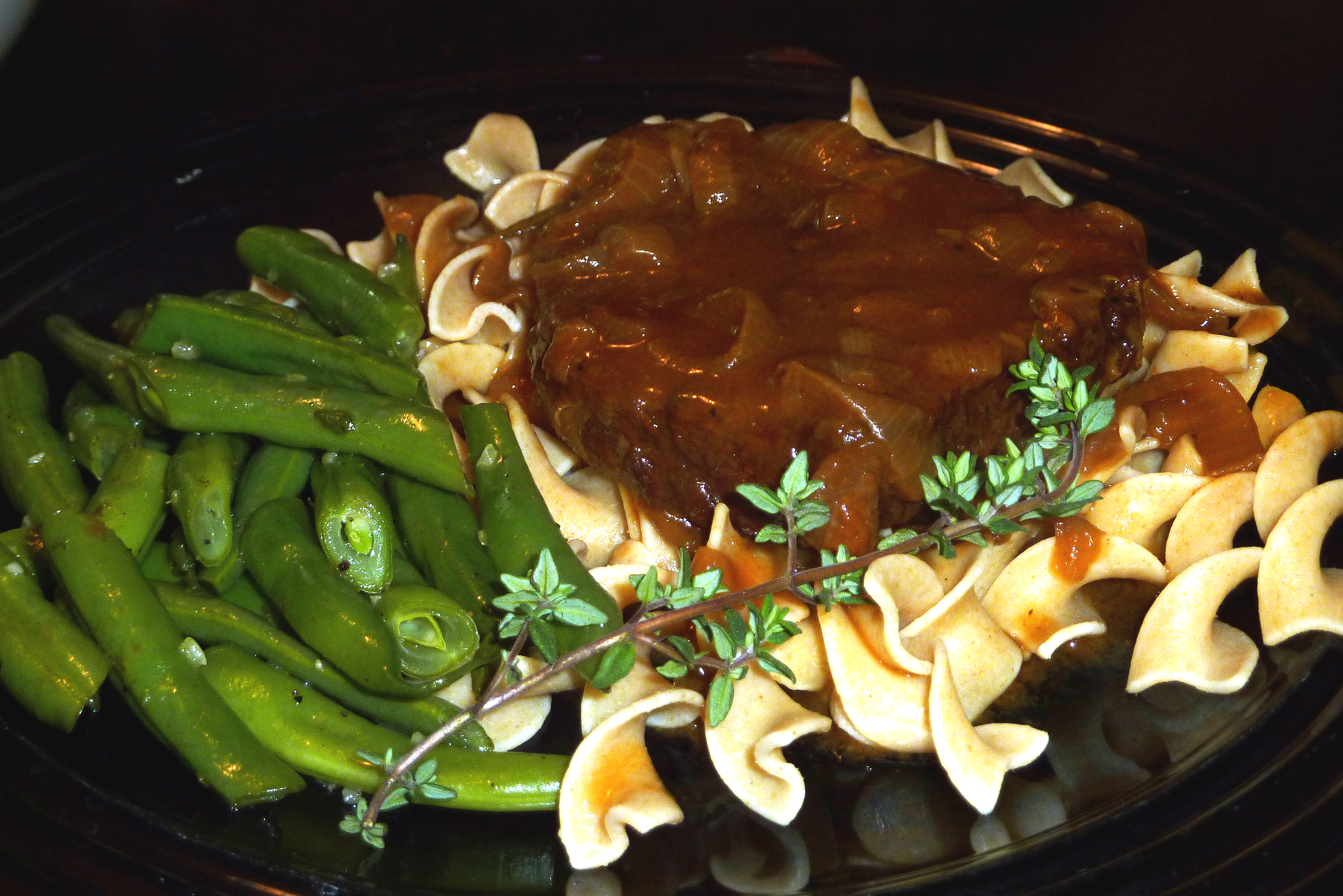
Other notes: Brown the steaks in a pan if you prefer, I kind of like the broiler for larger pieces of meat. A mostly whole star anise should do the trick but be sure to remove any pieces that break off during the cooking. I served these with whole wheat wide egg noodles and blanched then sautéed snap beans with garlic. Oh, and if you want to use a real Belgian ale I recommend Chimay Blue …just be sure to have another one on hand to enjoy with your steak!

Mock Carbonnade a La Flamande

5 to 7 – Beef Mock Tenderloin Steaks (About 2 Lbs)
3 – Medium Onions, Sliced
1 Tbsp – Tomato Paste
12 Oz – Medium Bodied Beer
1 Cup – Chicken Stock
1 Tbsp – Beef Soup Base (I used Demi-Glace Gold )
1 Star – Star Anise
1 Large Sprig – Fresh Thyme
1 Large Sprig – Fresh Rosemary
1 Tbsp – Red Wine Vinegar
Olive Oil
Kosher Salt & Freshly Ground Black Pepper

Warm a tablespoon of olive oil in a heavy stew pot or Dutch oven over medium heat. Stir in tomato paste, star anise, onions, and a ¼ teaspoon of fresh ground pepper. As the onions begin to sizzle lower the temperature to medium low and continue cooking stirring often. Meanwhile, line a cookie sheet with aluminum foil and coat with a thin film of oil (I used a spritz of Olive Oil Cooking Spray). Use a paper towel to pat the steaks dry and arrange them evenly on the cookie sheet. Brush or drizzle each steak with olive oil and season well on both sides with kosher salt and pepper. Continue cooking and stirring the onions 15 minutes or so until they begin to turn a deep golden color then stir in the thyme and rosemary…keep cooking and stirring the onions while you brown the steaks.

Set the oven (broiler) rack 3” below the element or flame. Place the steaks on the rack and turn the broiler on high. (Note: If your broiler is electric leave the door slightly ajar; if your broiler is gas fueled close the door.) Broil the steaks 4-6 minutes watching them closely until a nice brown crust has formed, carefully turn and broil 4 minutes more or until nicely browned.  Remove the steaks and set aside to rest while prepping your braise.

Reduce the oven heat to 300. Remove the star anise from the onions and discard. Stir beer, soup base, and chicken stock into the onions and raise the heat to medium high. Stir occasionally until the liquid just begins to boil, place the steaks into the pot, cover firmly and bake for 2 hours. After two hours remove from heat, leave covered, and set aside to rest.

Wait at least 20 minutes to remove the steaks to a serving platter; place the pot back on the burner over medium high heat. As the liquid comes to a boil reduce the heat to medium, stir in the vinegar and allow the gravy to cook until your desired thickness is reached.

Spoon the gravy over your steaks, serve and enjoy!